



Choose CP Landscape For Expert Armour Stone Installation Services in Carleton Place & Surrounding Area!
What is Armour Stone?
Armour stone is a large natural quarried stone commonly used in landscaping and construction for projects that require strength, stability, and visual impact. It is often chosen for retaining walls, shoreline reinforcement, grade changes, culvert ends, garden borders, and other hardscape features where both structural support and a natural appearance matter. These stones are chosen for their size, durability, and ability to withstand natural forces such as water currents and soil pressure. They are often strategically placed to provide stability and prevent erosion in areas prone to shifting soil or water erosion.
At CP Landscape, we supply, deliver, and install armour stone for homeowners and property owners looking to improve structure, drainage, erosion control, and curb appeal with a natural stone feature that stands the test of time.
Whether you want to build a retaining wall, define a garden, frame a driveway, or create a bold landscape focal point, armour stone offers a clean, upscale look with long-term performance. CP Landscape provides armour stone services for properties in Ottawa, Stittsville, Almonte, Ashton, Perth, and Smiths Falls, helping clients create landscapes that are both functional and attractive.
Popular Uses for Armour Stone
Armour stone is highly versatile and can be used in many types of landscape and property improvement projects, including:
- Retaining walls for sloped yards and grade changes.
- Landscape steps and transitions between elevations.
- Garden borders and raised planting beds.
- Driveway edging and culvert ends.
- Shoreline and erosion control applications.
- Poolside, patio, and outdoor living area accents.
- Feature walls and natural stone focal points.
For properties in Perth, Smiths Falls, Ashton, Almonte, Stittsville, and Ottawa, armour stone is especially useful where landscape design needs to balance appearance with drainage, slope management, and long-term durability. It is a practical solution for large outdoor spaces, estate lots, country properties, and homes that need stronger edging or structural support than standard landscape materials can provide.
Why Armour Stone Is an Attractive Addition to Your Property
Armour stone adds immediate presence to a landscape. Its large scale, natural texture, and earthy tones create a timeless look that blends beautifully with lawns, gardens, trees, driveways, and other natural stone features.
It also helps a property feel more finished and intentional. A well-designed armour stone wall, set of steps, or border can define outdoor spaces, add dimension to flat areas, and create a higher-end appearance that improves curb appeal from the street and enhances the enjoyment of the yard.
For homeowners in Ottawa and nearby areas like Stittsville, Almonte, and Perth, armour stone is an excellent way to introduce both structure and natural character into the landscape without sacrificing durability. It suits everything from modern front entrances to rural properties that need a rugged, natural fit with the surrounding environment.
Benefits of Armour Stone
Armour stone offers several important benefits for residential and landscape projects:
- Exceptional durability in harsh outdoor conditions. Armour stone is built for heavy-duty use and performs well through seasonal weather changes.
- Natural erosion control and support. It is commonly used where soil retention, slope stability, and shoreline protection are needed.
- Low maintenance. Once properly installed, armour stone requires minimal upkeep compared with many other landscape features.
- Timeless appearance. Natural stone does not go out of style and complements a wide range of property types.
- Strong property presence. Large stone features can make entrances, driveways, gardens, and yards feel more substantial and professionally finished.
- Versatility. It can be used for structural applications and decorative landscape design at the same time.
For many clients in Smiths Falls, Ashton, Ottawa, and the surrounding region, armour stone is a smart investment because it combines strength, visual appeal, and long service life in one material. When installed correctly with proper site preparation, it can provide lasting function while elevating the overall look of the property.
Why Use Armour Stone for Your Landscaping Project?
Armour Stone is commonly used in landscaping projects for several reasons:
Durability: Armour Stone is highly durable and long-lasting, making it ideal for outdoor use where it will be exposed to the elements.
Aesthetic Appeal: The natural appearance of Amrour Stone adds a rustic and visually appealing element to landscaping designs.
Versatility: These stones can be used for various landscaping purposes, including creating retaining walls, defining borders, or adding decorative accents.
Strength and Stability: Armour Stone provides excellent structural support, making it suitable for stabilizing slopes, preventing erosion, and retaining soil in gardens or flowerbeds.
Low Maintenance: One installed, Armour Stone requires minimal maintenance, saving time and effort in the long run.
Overall, Armour Stone is value for it’s combination of functionality, aesthetics, and durability, making it a popular choice for landscaping projects.
Our Armour Stone Process
CP Landscape offers armour stone consultation, delivery, and installation, helping clients move from idea to finished project with one team. We can consult on design and carry out delivery and installation of large natural quarried boulders to enhance a property.
Our process can include site review, design planning, material selection, excavation or base preparation where needed, and professional placement of each stone for stability and appearance. This is important because armour stone projects often require careful preparation depending on the application, size of stone, and grade conditions.
How is it Installed?
Installing Armour Stone typically involves several steps:
Site Preparation: Clear the area and remove excess material where the Armour Stone will be placed. This may involve removing vegetation, debris, and any existing structures or materials.
Excavation: Excavate the area to create a level and stable base for the Armour Stone. The depth of excavation will depend on the size of the Armour Stone being installed.
Base Material: Lay a base of crushed stone to provide a stable foundation for the Armour Stone. This base layer gets leveled and compacted and helps to distribute the weight of the Armour Stone evenly and prevent settling or shifting.
Placement: Carefully place each Armour Stone in its intended position, taking care to align them properly and ensure a tight fit between stones.
Backfilling: Once all the Armour Stones are in place, a landscape fabric is placed behind the wall to prevent material from working its way through any small gaps in the wall, but also still allowing water to escape. The wall then gets backfilled partially with drainage rock and then finished with soil.
Service Areas
From retaining walls in Ottawa to driveway edging in Stittsville, rural landscape improvements in Ashton, and natural stone features in Almonte, Perth, and Smiths Falls, CP Landscape helps property owners add durable, attractive stonework that fits the character of the site. TWe operate from our depot in Carleton Place and provide landscaping services in Carleton Place and surrounding areas.
Looking to upgrade your landscape with natural stone that delivers both strength and style? CP Landscape provides armour stone design consultation, delivery, and installation for homeowners in Ottawa, Stittsville, Almonte, Ashton, Perth, and Smiths Falls.
Contact CP Landscape today to request a quote for your armour stone project and start planning a landscape feature that adds lasting beauty, structure, and value to your property.
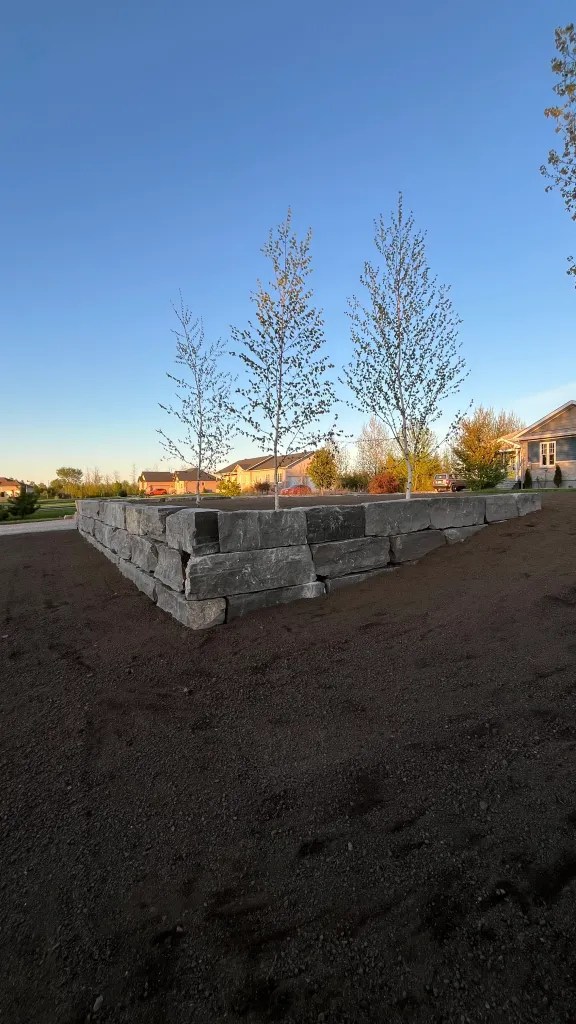
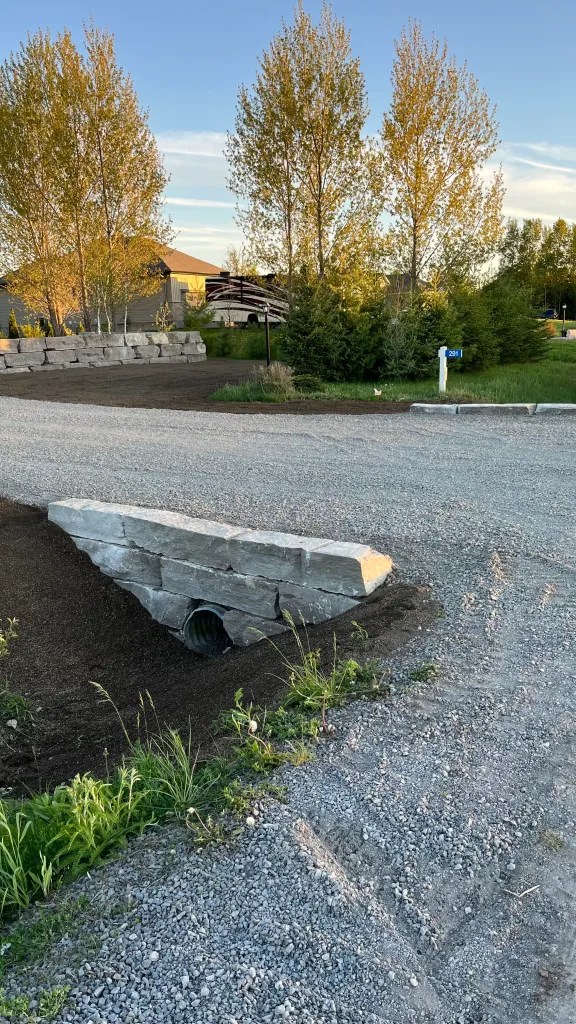
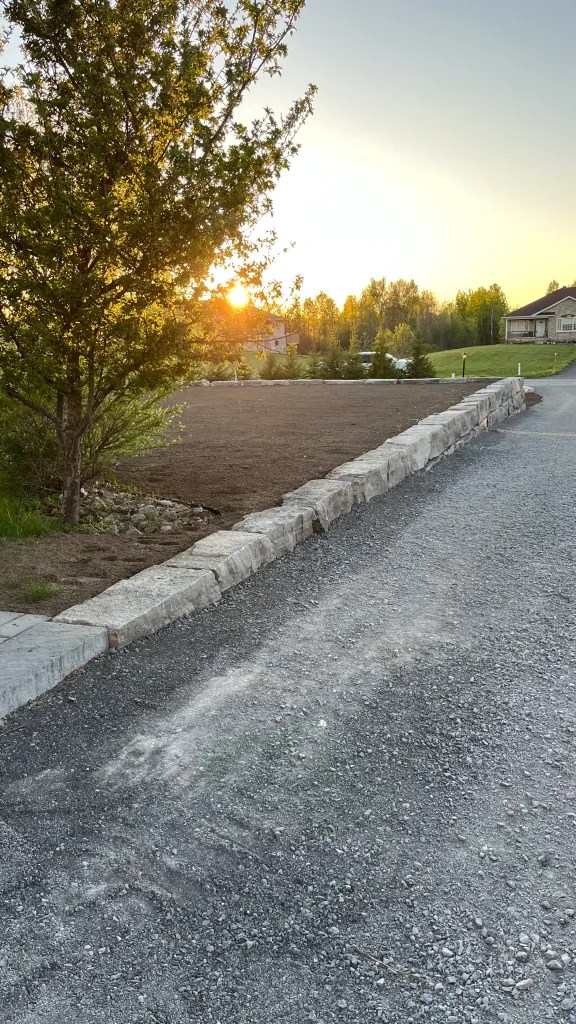
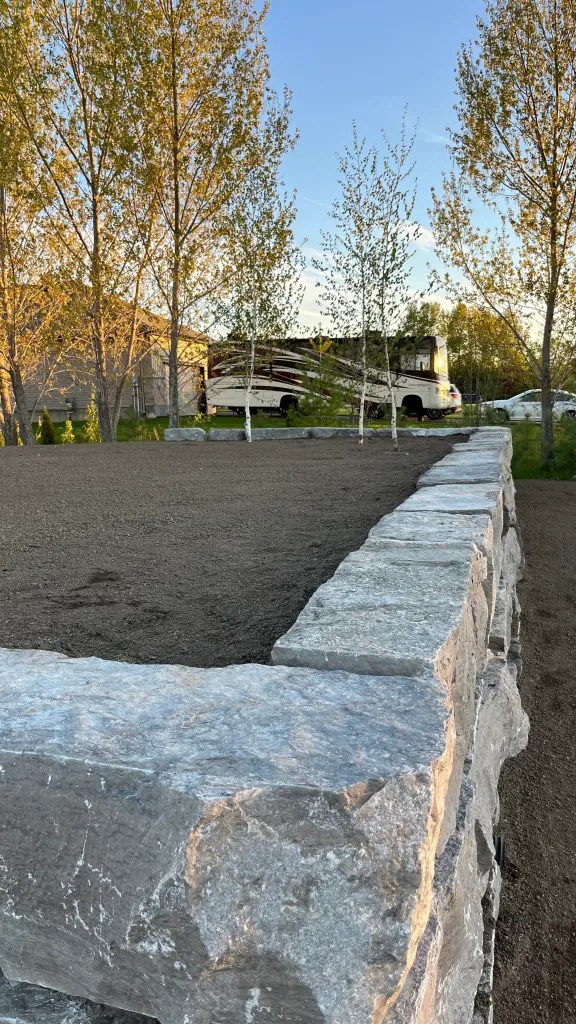
View some of Our Recent Armour Stone Projects:





FAQ: Armour Stone Wall Maintenance
Are armour stone walls low maintenance?
Yes. When armour stone walls are properly designed and installed, they are generally low maintenance. Most property owners only need to perform light seasonal checks, basic cleaning, and simple drainage upkeep to keep the wall looking good and functioning properly.
How often should I inspect my armour stone wall?
It’s a good idea to visually inspect your wall at least twice a year, typically in the spring and fall, and after major storms. Walk along the wall and look for gaps between stones, signs of soil washout at the base, or water pooling or running directly against the stones so small issues can be addressed before they become larger problems.
Can plants or trees damage an armour stone wall?
They can if they’re not managed carefully. Deep-rooted trees, shrubs, and volunteer saplings that grow too close to the wall may exert pressure on the stones or disturb the base over time. The best approach is to trim back vegetation, remove weeds from joints, and avoid planting large trees immediately next to the wall so roots don’t interfere with the structure.
What should I do about water and drainage around my wall?
Good drainage is essential. Keep nearby drains, swales, and culverts clear of debris so water can move away from the wall, and replace any washed-out gravel or soil at the base promptly. Make sure downspouts and sump discharge pipes are not aimed directly at the wall to prevent excessive water pressure behind the stones.
How do I clean an armour stone wall?
Most walls only need occasional light cleaning. A low-pressure rinse is usually enough to remove dust, dirt, and organic material. For stubborn spots, use a soft brush with water and avoid harsh chemicals or high-pressure washing, which can damage the stone surface or disturb the joints.
What signs of movement should I watch for on sloped properties?
On sloped sites or walls retaining significant amounts of soil, check for stones that have shifted out of line, bulging sections, or new cracks forming in nearby patios or walkways. These can be signs that the wall or base needs attention. If you notice these issues, it’s best to have a professional review the wall and recommend corrective work.